Five compact induction cooktops and the controls that distinguish them.
A five-product editorial roundup with a live comparison table, a product Showcase, and a reusable Pros & Cons card. All three visual sections are produced by the installed WordPress plugins.
Live WordPress output — not screenshots.
Scroll inside the preview to explore the comparison table, Product Showcase and Pros & Cons card. On smaller screens, swipe horizontally to see the wider tablet and laptop previews.
Product comparison table
This responsive five-item table is generated by the AzlinkPRO – Tables plugin. Follow the listed models and compare their documented features.
Top 5 Portable Induction Cooktops
Compare the key features, then see current product details and pricing on Amazon.
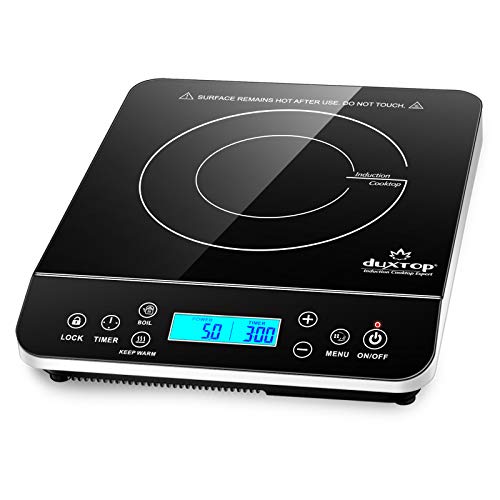
- 1,800 watts
- 20 power and 20 temperature settings
- Touch controls and LCD
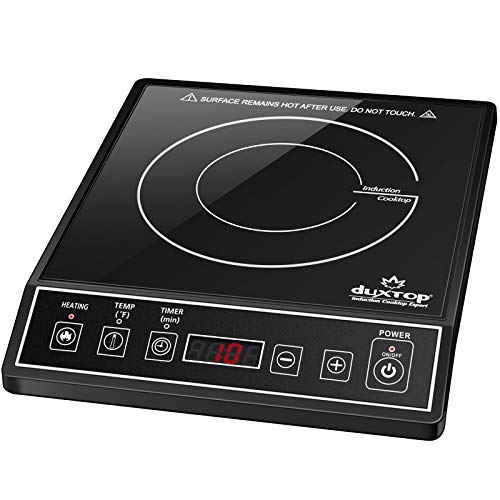
- 1,800 watts
- 15 power and 15 temperature settings
- Angled control panel
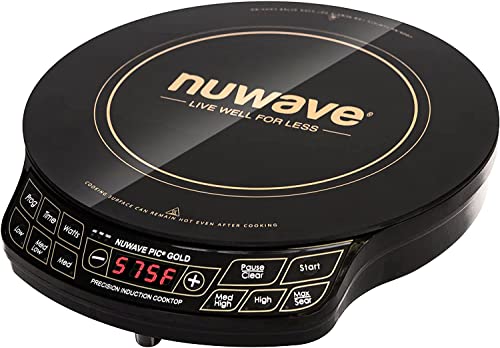
- Up to 1,500 watts
- 51 temperature selections

- 1,800 watts
- 18 power settings and 17 temperature settings

- 1,800 watts
- 8 power settings and 8 temperature presets
As an Amazon Associate, we may earn a small commission from qualifying purchases.
Five individual product reviews
Each review highlights the intended use, published attributes and practical limits. Product listings can change, so check the current manufacturer details before purchasing.
1. Duxtop 9600LS Portable Induction Cooktop
Good fit for: Fine-grained setting control.
The Duxtop 9600LS provides a stated 1,800 watts of maximum output, 20 power levels, 20 temperature selections, and an LCD with touch controls. That range of settings makes it an interesting starting point for people comparing fine adjustment options in a portable burner.
Advantages: Several temperature and power choices; electronic display.
Considerations: One cooking zone; compatible magnetic cookware required; no independent boiling-time or fan-noise test is claimed.
2. Duxtop 9100MC Portable Induction Cooktop
Good fit for: Simple everyday adjustments.
This Duxtop model has a stated 1,800-watt maximum, 15 power levels, 15 temperature selections and an angled control panel. Relative to the 9600LS, it presents fewer steps. That can be appealing when readers prefer a more straightforward group of options instead of maximum granularity.
Advantages: Angled controls, portable format and a practical range of levels.
Considerations: Fewer adjustments than the 9600LS; physical size, power supply and cookware requirements still matter.
3. NuWave PIC Gold Induction Cooktop
Good fit for: Temperature selection flexibility.
The NuWave PIC Gold example emphasizes up to 1,500 watts and a selection of 51 temperature settings. The many temperature choices distinguish it from the other entries, although a larger settings count does not prove greater cooking accuracy without measurement. NuWave sells different versions, so exact specifications should be checked against the selected listing.
Advantages: Many selectable temperature levels.
Considerations: Stated maximum power is lower than 1,800-watt models; verify variant-specific specifications.
4. iSiLER Sensor Touch Portable Induction Cooktop
Good fit for: Compact touch operation.
The iSiLER example lists a 1,800-watt maximum, 18 power settings and 17 temperature settings, placing it between the more basic preset-based models and larger menus. The portable single-burner layout is intended for countertop cooking with appropriate induction pans.
Advantages: Multiple power and temperature controls; countertop-friendly single-burner design.
Considerations: Only one cooking area and no independent efficiency, noise or durability measurements here.
5. Amazon Basics 1800W Portable Induction Cooktop
Good fit for: A shorter preset menu.
The Amazon Basics entry is described as 1,800 watts with eight power settings and eight temperature presets. This provides a clear contrast with the more adjustable models: fewer controls to navigate, but fewer distinct steps available. Consider the control interface and your usual cooking tasks, rather than assuming more presets are always necessary.
Advantages: Simplified selections and compact layout.
Considerations: Fewer adjustments than the other examples; verify model and availability.
How to choose
Choose the model whose controls, power options and form factor suit your kitchen. More settings do not automatically mean better performance, and cookware compatibility is essential.
AzlinkPRO Showcase example
A live single-product display for the first item in this guide, embedded from AzlinkPRO – Showcase.
Duxtop 9600LS Portable Induction Cooktop
- Portable 1,800-watt cooktop with 20 power settings, 20 temperature settings and an LCD touch control panel
As an Amazon Associate, we may earn a small commission from qualifying purchases.
AzlinkPRO Pros & Cons example
This separate plugin card demonstrates a balanced, editable summary for the featured product.
Duxtop 9600LS Portable Induction Cooktop - Pros and Cons
Illustrative demo based on public product specifications, not a hands-on test.
Pros
- 20 power settings Provides a range of power levels for different cooking tasks.
- 20 temperature settings Offers selectable temperature settings for cooking control.
- Touch controls and LCD Includes an electronic control panel and display.
Cons
- Induction-compatible cookware needed Pots and pans must have a suitable magnetic base.
- One cooking zone Only one pot or pan can be heated at a time.
This example demonstrates how a balanced verdict appears. Check the product specifications and compare your own cooking requirements before choosing.
Review sources and transparency
The content above is a demonstration based on product specifications and research, not a firsthand laboratory test. There are no fabricated prices, customer testimonials, or performance scores.
See our original induction table plugin demonstration
Affiliate disclosure: As an Amazon Associate, we may earn a small commission from qualifying purchases.